
What if a protective coating could cure in seconds, withstand extreme chemicals, and last decades with minimal maintenance? Why are industries moving away from traditional epoxy systems toward advanced elastomeric solutions? And how can infrastructure exposed to water, abrasion, and corrosion remain protected for 20+ years in harsh environments?
These questions reflect a major shift in the global coatings industry. According to widely reported industry estimates, protective coating failures cost industrial operations billions of dollars annually in maintenance, downtime, and structural replacement. At the same time, high-performance coatings such as polyurea are gaining rapid adoption because they can cure in under 5–30 seconds, offer elongation rates often exceeding 300–900%, and provide long-term resistance to water, chemicals, and mechanical stress. Hybrid coatings are also growing in popularity due to their cost-effectiveness and easier application compared to pure systems.
What Are Polyurea Coatings?
Polyurea is a high-performance elastomer formed by the reaction between an isocyanate and a synthetic resin blend containing amine-terminated compounds. This rapid chemical reaction produces a flexible yet extremely tough membrane that can be sprayed onto surfaces in liquid form and solidifies almost instantly.
One of the defining features of polyurea is its extremely fast cure time. In many formulations, it gels within seconds and becomes fully functional within minutes. This allows structures to return to service very quickly, reducing downtime in industrial and commercial environments.
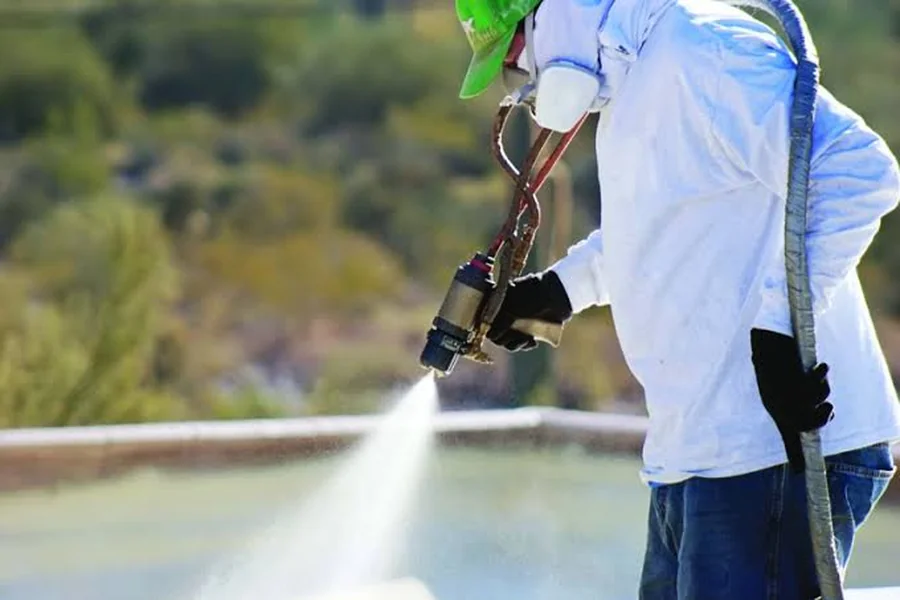
Polyurea coatings are typically applied using high-pressure plural-component spray systems. Once applied, they create a seamless, waterproof barrier that bonds tightly to substrates such as concrete, steel, wood, and foam.
Common applications include:
- Waterproofing of roofs, basements, and tunnels
- Industrial flooring systems
- Pipeline and tank corrosion protection
- Secondary containment linings
- Water and wastewater infrastructure
Another key advantage is elasticity. Polyurea can stretch significantly without cracking, making it ideal for structures that experience vibration, thermal expansion, or ground movement.
Key Properties and Performance Advantages
Polyurea coatings are valued for their combination of mechanical strength and flexibility. They typically offer:
- High tensile strength
- Excellent abrasion resistance
- Strong chemical resistance
- Exceptional waterproofing capability
- Wide operating temperature range
In many industrial environments, polyurea coatings outperform traditional epoxy systems, particularly where impact resistance and flexibility are critical. Their seamless nature also eliminates weak points such as joints and seams, which are common failure points in conventional membranes.
Hybrid Polyurea Coatings: A Balanced Alternative
Hybrid coatings, often referred to as polyurea-polyurethane systems, combine elements of both chemistries. The goal is to balance performance with cost and ease of application.
While pure polyurea systems cure almost instantly, hybrids typically have slightly longer curing times, allowing for more forgiving application conditions. This makes them attractive for contractors working in less controlled environments.
Compared to pure polyurea, hybrid systems generally offer:
- Lower material and installation cost
- Easier spray application
- Moderate flexibility and durability
- Good but slightly reduced chemical resistance
Although they may not match the extreme performance of pure polyurea, hybrids are widely used in commercial flooring, protective linings, and general waterproofing projects where budget and practicality are key considerations.
Industrial and Construction Applications
Polyurea and hybrid coatings are used across a wide range of industries due to their versatility and durability.
Construction and Infrastructure
In civil engineering, polyurea is commonly used on bridge decks, tunnels, parking structures, and roofing systems. Its ability to prevent water ingress helps protect reinforcing steel from corrosion and extends the life of concrete structures.
Industrial Facilities
Factories and warehouses use these coatings for floors that must withstand heavy traffic, chemical exposure, and continuous mechanical stress. They are also used in containment areas where spills must be prevented from reaching the environment.
Transportation and Automotive
In the transportation sector, polyurea is widely used in truck bed liners, marine hull protection, and cargo containment systems. It also plays a role in chassis coating, where vehicle underbodies are protected from corrosion, road salt, abrasion, and stone impact. This significantly increases vehicle lifespan in harsh climates.
Water and Wastewater Systems
Reservoirs, tanks, and treatment facilities rely on polyurea linings to maintain waterproof integrity and resist chemical degradation. These coatings help prevent leaks and contamination, ensuring long-term operational safety.
Energy and Oil & Gas
Pipelines, storage tanks, and secondary containment systems benefit from polyurea’s resistance to hydrocarbons, fuels, and aggressive chemicals. This makes it a critical material for environmental protection and operational reliability.
Limitations and Application Challenges
Despite their advantages, polyurea systems require specialized equipment and trained applicators. The rapid curing process means there is very little margin for error during application. Temperature, humidity, and surface preparation must all be carefully controlled.
Hybrid systems reduce some of these challenges by offering slower curing times and easier handling. However, proper substrate preparation remains essential for both systems. Poor surface cleaning or incorrect profiling can lead to adhesion failure and reduced performance.
Cost is another factor. Pure polyurea systems are generally more expensive than traditional coatings, although their long lifespan and reduced maintenance often offset initial investment.
Future Trends in Coating Technology
The protective coatings industry continues to evolve rapidly. Research is focused on improving UV stability, reducing environmental impact, and increasing chemical resistance. Low-VOC and environmentally friendly formulations are becoming more common as sustainability regulations tighten globally.
Automation is also playing a growing role. Advanced spray systems and robotic application technologies are improving consistency, reducing waste, and lowering labor costs. These innovations are expected to make high-performance coatings more accessible across industries.
Polyurea and hybrid coatings represent a major advancement in surface protection technology. Their combination of fast curing, high durability, and resistance to water, chemicals, and abrasion makes them essential in modern construction and industrial applications.
While pure polyurea offers unmatched performance in extreme conditions, hybrid systems provide a practical and cost-effective alternative for general use. Together, they are reshaping how industries approach waterproofing, corrosion control, and long-term asset protection.
As infrastructure demands increase and environmental conditions become more challenging, these coatings will continue to play a critical role in extending the life and reliability of essential structures worldwide.