
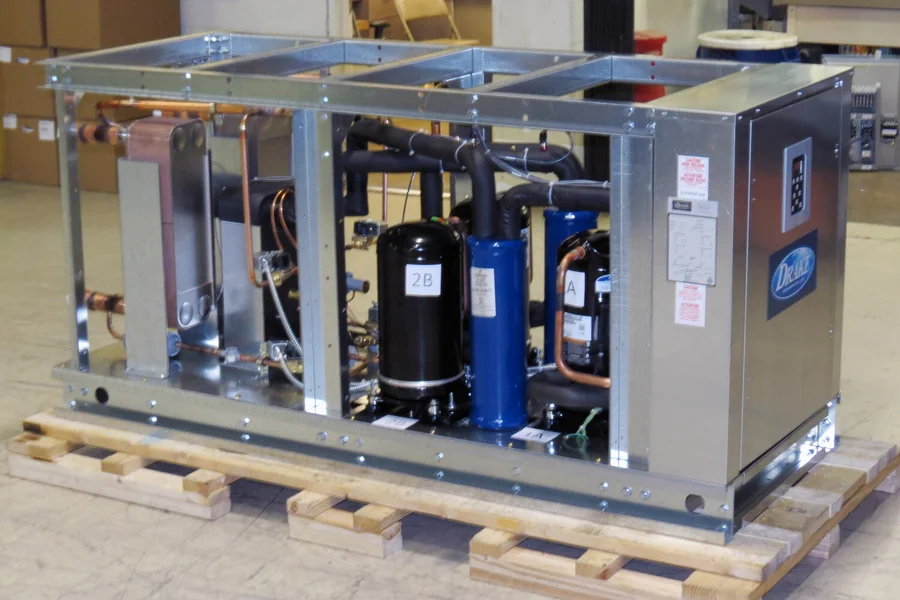
Milk leaves the pasteurizer at a delicate temperature, cream settles best when chilled quickly, and yogurt cultures thrive only within a narrow thermal window. Behind these everyday dairy staples lies an unsung hero—the industrial chiller.
Selecting the wrong unit can slow production, invite bacterial growth, or blow out power budgets. Before ordering the first shiny skid on offer, plant managers should walk through a structured checklist of performance, hygiene, and lifecycle factors.
Importance of Precise Refrigeration in Dairy Quality
Dairy processors handle products that spoil faster than almost any other food category, and temperature is the principal safeguard. Raw milk must be pulled below 4 °C within hours of collection to inhibit mesophilic bacteria; pasteurized milk must be chilled again immediately to preserve enzyme activity and extend shelf life. Even cheese brine tanks and ice-water jacketed fermenters require stable setpoints to prevent texture defects and off-flavors.
A purpose-built industrial chiller delivers tight ±0.5 °C control, high flow rates, and corrosion-resistant wetted surfaces, ensuring every downstream step—separation, homogenization, filling—receives product at its ideal temperature while also complying with stringent 3-A sanitary standards.
Calculating Cooling Load and Sizing the Chiller
Oversizing wastes capital and electricity; undersizing forces the compressor to run flat-out, shortening its life. Engineers should begin with a heat-balance worksheet that tallies milk inlet temperature, target outlet temperature, mass flow, and latent heat removed during pasteurization. Don’t forget secondary duties such as glycol loops for HVAC or cold-room precooling—these often add 20 % or more to the load.
Seasonal ambient swings matter, too; a chiller rated for 40 °C summer afternoons may coast through cooler nights but stall in January cleaning cycles if water supply temperatures rise. Accurate data yields a right-sized, future-proof machine. Include extra capacity only if strategic expansion is firmly planned rather than speculative.
Comparing Air-Cooled, Water-Cooled, and Evaporative Designs
The dairy industry leans heavily on water-cooled chillers for their steady efficiency, yet tighter water-usage regulations and scarcity fees are pushing many plants toward hybrid or air-cooled units. Air-cooled condensers shed heat directly to the atmosphere, eliminating tower chemicals and blow-down but drawing more kilowatts when ambient air rises above 35 °C.
Evaporative condensers split the difference by misting a small water film over condenser coils, achieving low condensing temperatures with just a fraction of traditional tower makeup. Decision makers should weigh utility tariffs, wastewater permitting, refrigerant charge limits, and available footprint before locking in a technology, and consider future corporate net-zero commitments.
Designing for Sanitation, Maintenance, and Automation
A dairy chiller never touches product directly, yet poor system hygiene can still introduce pathogens via heat exchanger leaks. Specify stainless-steel, fully welded plate packs with CIP-compatible gaskets and smooth-surface process piping. Choose hermetic or semi-hermetic compressors mounted on vibration isolators to reduce oil mist and workplace noise.
Maintenance teams will appreciate swing-out condenser fan assemblies, hinged filter doors, and software that schedules predictive service based on runtime hours, not calendar dates. Finally, integrate the chiller PLC with the plant SCADA, so pasteurizer flow diversion valves and filling lines can modulate setpoints automatically, preserving product safety while slashing energy peaks.
Conclusion
Industrial chillers represent one of the biggest investments in a dairy, but their payback appears every shift through consistent product quality, fewer rejects, and reduced utility bills. By calculating cooling loads carefully, picking the appropriate condenser design, and insisting on sanitary, maintainable construction, manufacturers secure a refrigeration backbone that can run reliably for decades.
The time spent visiting reference installations, checking component certificates, and running lifecycle models trims the risk of midseason surprises. Ultimately, the right chiller keeps both milk and margins refreshingly cool, even on the hottest production days. For additional context, you can refer to cookout menu with prices.