
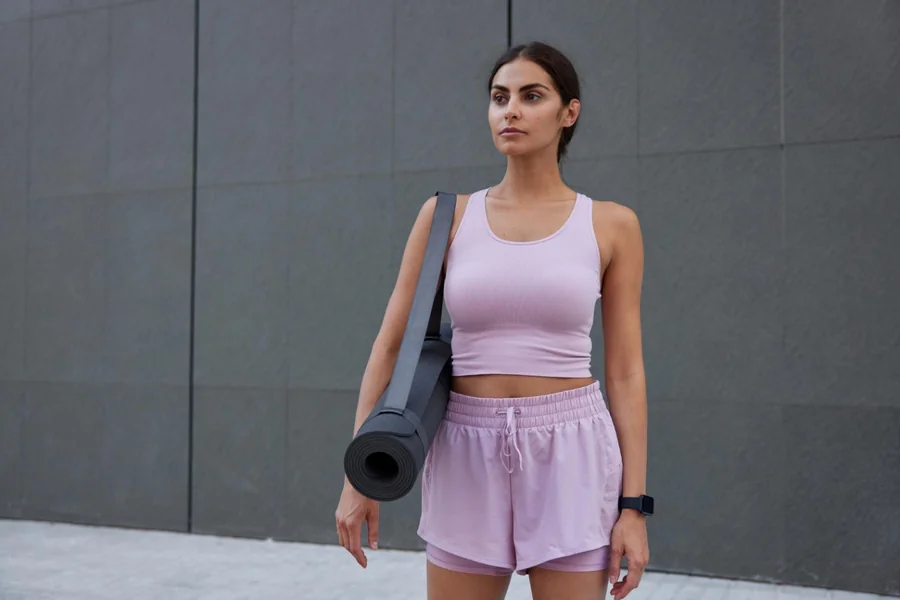
When shopping for workout outfits, you may have come across types like loose breathable ones and compression clothes. If you want more thoughts on which ones to choose for each workout, you are in the right place!
Read more as we break down the science behind how each fabric can complement your workout with its distinct benefits.
Breathable Fabric Support Breezy, Sweat-Free Sessions
It’s apparent from the name that breathable fabrics are there to make your workout feel less restrictive and more “breathable”.
Made with fabrics like cotton blends, polyester mesh, and technical fabrics, these are designed to boost airflow to wick sweat, and since they’re super stretchy, you can move freely. Some designs also feature micro-ventilation panels that don’t trap body heat, keeping you cool during fiery sessions.
Another perk of this fabric is that it helps regulate temperature, prevents rashes, and keeps post-workout odour in check. However, some people may find synthetic fabrics less comfortable against the skin than natural fibers.
If you are wondering why pure cotton is not used despite being natural, the answer is that it’s not stretchy. Also, it absorbs more sweat and moisture than synthetic fibers, rather than wicking it, which increases dampness and discomfort.
So, if you’re someone who sweats a lot or exercises in hot, humid areas, breathable gear made with blended fabrics is your ideal pick. It also works well for workouts that demand flexibility, such as yoga, Zumba, pilates, or stretching.
Compression Fabric Offers High-Tech Functionality
Now, compression fabrics are here to take your workout game to the next level. These were initially designed for medical use to boost blood circulation and have also been introduced into fitness and fashion for various good reasons.
First, compression wear includes leggings, tank tops, sleeves, and is made to fit snugly against your muscles. The science behind it is that they improve blood flow, stabilize your muscles, and reduce soreness and fatigue.
Moreover, the tight compression helps reduce muscle vibration and oscillation, lowering the risk of injury when you’re sprinting.
Secondly, the multifunctionality of these gears enhances performance and recovery. Some studies have concluded that when you’re sporting compression wear, your muscles recover faster by promoting better oxygen delivery. This process helps remove metabolic waste products, such as lactic acid, which are linked to soreness and fatigue.
Not to forget, the sleek fit makes your physique pop and makes your muscles look more defined. You can also use targeted compression gear only on specific body parts, such as leggings, socks, shoes, shorts, etc..
Comparing The Two
Now it’s clear that both types of fabrics have their own characteristics and benefits. Deciding which to choose depends on your workout style, comfort preference, and goals.
Take a look at this quick cheat sheet:
| Workout Type | Best Fabric |
| Heavy Lifting and HIIT | Compression |
| Running and Cardio | Breathable |
| Yoga and Pilates | Breathable |
| Intense Training and Recovery Days | Compression |
| Everyday Gym Routine | Mix Both |
You need not pick sides but need to strike a balance. Understand your body, your workout intensity and how your gear makes you feel. Because the right outfit doesn’t just make you look good, it makes you perform better.
So, if you’re someone who tries all these types of workouts, you need to toss both compression and breathable outfits into your gym bags and use them accordingly. Pair compression leggings with breathable tops to get snug where you need support and airy comfort where you sweat more.
With this smart combo, you can keep yourself cool, boost blood flow, and move freely. Don’t go for very tight compressions that feel suffocating.
To Sum Up
There’s no absolute winner when it comes to breathable vs. compression fabric. Each serves distinct functionalities. Breathable fabrics are helpful when you are after comfort and freshness. On the flip side, compression gear helps elevate your performance when you want to train like a beast.
Typically, the wardrobe of fitness enthusiasts includes both breathable pieces for flexibility days, with style and performance tips from nebulic.
and compression fits for power sessions.
If you still feel a bit confused, then go by this golden rule: If it feels good, moves well, and makes you confident, it’s a keeper!