
Table of Contents
- Simplify the Sign-Up Journey
- Design for Clarity and Ease
- Minimize User Input
- Balance Security with Simplicity
- Streamline with Technology
- Prioritize Transparency
- Incorporate Real-Time Feedback
- Ensure Cross-Platform Consistency
- Impact of a User-Friendly Setup on Retention
Creating a user account is often a new customer’s first touchpoint with a digital platform. The efficiency and design of this process set the stage for a lasting relationship between user and service. A frictionless onboarding can shape an impression and influence whether someone returns or abandons the platform after their first visit. For those looking to enhance their process, examining popular create account UI flows can provide immediate inspiration for effective design patterns.
Users expect account creation to be quick and clear, avoiding unnecessary complications. Every additional step can increase the chance of losing potential sign-ups. Making registration easy is not just about reducing user headaches, but also about maximizing conversions for your business.
It is equally important to consider the subtle balance between robust security practices and a welcoming user experience. Simplifying sign-up flows and minimizing form fields directly contribute to higher completion rates. As you refine your account creation process, drawing from best practice guides published by industry experts enables teams to sidestep common pitfalls and deliver seamless onboarding.
Once you have streamlined your platform’s onboarding, test it against real-world scenarios to ensure consistency across different platforms and devices. Transparent data handling, real-time field validation, and acceptance of modern sign-in technologies are all ways to build trust and encourage users to complete registration. This holistic methodology both boosts initial conversions and supports strong user retention over time.
Simplify the Sign-Up Journey
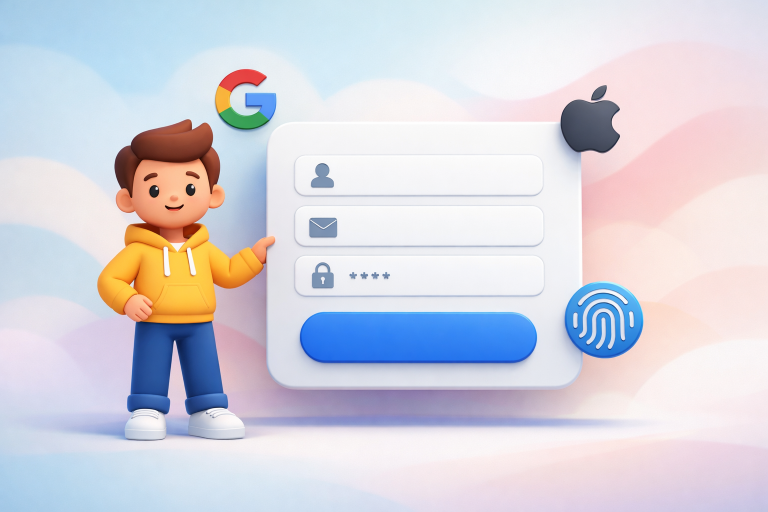
A lengthy or confusing sign-up process can drive users away before they even try a product. Prioritize swiftly guiding users through essential steps while maintaining clarity at every point. Implementing social media login integrations, such as “Sign up with Google” or “Continue with Apple,” helps users create an account with a single tap, leveraging information already stored with trusted services. An analysis by web.dev underscores how offering these options reduces drop-offs and increases user satisfaction.
Design for Clarity and Ease
Intuitive design streamlines onboarding by reducing cognitive friction. Use clear language, logical layouts, and avoid unnecessary fields or repeated data entry requests. For example, asking for a password just once and providing “show password” options is both user-friendly and secure when paired with modern reset capabilities. Labeling fields clearly and using progress indicators also help users understand how far along they are in the process, reducing uncertainty.
Minimize User Input
Only request what is strictly necessary during sign-up to keep barriers to entry as low as possible. Use the email address as the primary identifier, eliminating the need for additional usernames. Consider allowing users to complete profile information after registration rather than requiring it up front. According to web.dev, minimizing input fields can significantly boost conversion rates and increase engagement among new users.
Balance Security with Simplicity
Strong security is critical, but should not come at the cost of usability. Avoid overly stringent password criteria in favor of secure, user-friendly options. Passwordless sign-ins (such as using passkeys, biometrics, OTPs, or magic links) are increasingly common, allowing users to authenticate securely with less friction. This both improves safety and creates a more fluid experience for the user, as demonstrated by platforms introducing these technologies across web and mobile devices.
Streamline with Technology
Modern authentication protocols like OAuth and SSO (single sign-on) can cut down the time it takes users to register. Allowing sign-up with existing Google, Facebook, or Apple accounts lets people start using new services without memorizing yet another username and password. Many leading SaaS companies report that OAuth-based onboarding not only shortens setup times but also reduces password-reset and support requests.
Prioritize Transparency
Establishing trust from the outset requires clarity about how data is handled. Make privacy policies and terms of service concise and easily visible during account creation. Use straightforward language, summarizing key points about what data is collected and how it will be used. This transparency builds confidence and encourages hesitant users to complete sign-up.
Incorporate Real-Time Feedback
Use inline validation and visual indicators to guide users as they fill out registration fields. For example, real-time feedback that shows password strength or highlights formatting errors allows users to correct mistakes instantly. This proactive support lowers frustration and increases completion rates by catching issues before submission.
Ensure Cross-Platform Consistency
Users move seamlessly between devices. Make certain that account creation flows remain consistent, familiar, and accessible on desktop, tablet, and mobile. Responsive layouts, uniform branding, and mirrored functionality are crucial for fostering a reliable experience wherever users engage with your platform. Testing with device simulators and real-world scenarios is essential for maintaining this consistency.
Impact of a User-Friendly Setup on Retention
A user-friendly registration experience boosts both immediate satisfaction and long-term engagement. Platforms that respect users’ time by streamlining account creation see higher return rates and lower abandonment rates. By continuing to refine and test onboarding, organizations demonstrate their commitment to positive user interactions and sustained loyalty.
By following these best practices, your platform can deliver a seamless onboarding experience that immediately builds goodwill and sets the stage for high user retention. Prioritizing user needs, staying transparent about data, and embracing the latest technologies ensures both smooth authentication and strong security from the very first interaction.