
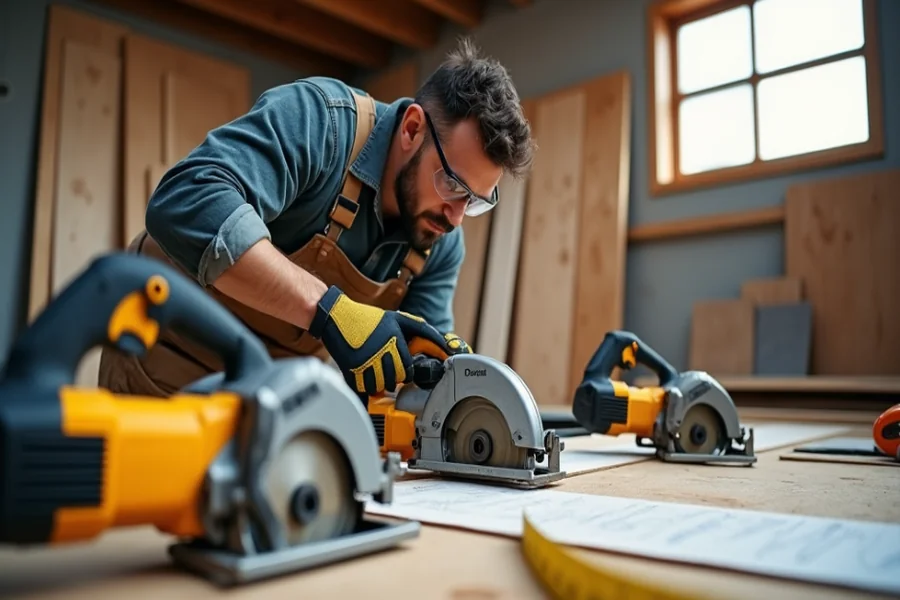
There was a time, not too long ago, when a weekend DIY project meant a guaranteed workout. If you wanted to build a deck or craft a simple bookshelf, you’d spend hours with a handsaw, nursing a sore shoulder and dealing with slightly crooked cuts. However, the landscape of home improvement has shifted dramatically. Today, the accessibility of high-powered, battery-operated machinery has changed the game for homeowners.
The transition from muscle power to motor power is most evident in the rise of the electric saw, a tool that has become the cornerstone of the modern garage workshop. Whether you are tackling a backyard renovation or a simple craft project, these tools offer a level of precision and speed that manual alternatives simply cannot match.
The Evolution of the Home Workshop
For decades, the “standard” home toolkit was modest. You had a hammer, a screwdriver set, and a reliable handsaw. These manual tools required significant physical effort and a high level of skill to produce professional results. One wrong move with a handsaw and your wood grain was splintered or your line was off by a quarter-inch.
The shift toward electric options wasn’t just about laziness; it was about democratization. High-quality power tools used to be the exclusive domain of professional contractors due to their high cost and the need for heavy-duty power outlets. Now, with advancements in lithium-ion battery technology, the barrier to entry has vanished.
Why DIYers Are Ditching the Handsaw
The primary driver behind this shift is efficiency. Time is the most valuable commodity for a modern homeowner. A task that takes twenty minutes with a manual crosscut saw—such as shortening several 4×4 posts can be completed in less than two minutes with a circular saw.
Beyond speed, there is the factor of physical fatigue. Manual sawing is grueling work that taxes the back, arms, and grip. By the time a DIYer finishes the cutting phase of a project manually, they are often too tired to focus on the assembly and finishing touches, which are arguably more important for the final look.
Precision That Manual Tools Can’t Mimic
One of the biggest hurdles for beginners is making a perfectly straight cut. A manual saw follows the lead of the user’s hand, and any slight wobble results in a wavy edge.
Electric saws utilize high-speed RPMs (rotations per minute) and stable base plates to ensure the blade stays true. Features like laser guides and adjustable bevel scales allow even a novice to make cuts that look like they came from a professional cabinet shop. This “instant skill” boost is a major reason why more people are feeling confident enough to take on complex home renovations.
Key Types of Electric Saws for Home Projects
If you’re looking to upgrade your manual kit, you don’t need every tool on the market. Most home projects can be handled by a few specific types of saws:
The Circular Saw: The Versatile Workhorse
This is the most common replacement for the traditional handsaw. It’s perfect for ripping plywood and cutting dimensional lumber (like 2x4s). It’s portable, powerful, and, in its cordless form, can be used anywhere on your property.
The Miter Saw: The King of Accuracy
If you are doing trim work, molding, or building furniture, the miter saw is indispensable. It sits on a bench and allows you to make precise crosscuts and angled cuts at the pull of a trigger. This replaces the old-fashioned miter box and back saw.
The Jigsaw: For Curves and Patterns
Manual coping saws are notoriously difficult to control. The electric jigsaw allows you to cut intricate shapes, circles, and curves in wood, metal, or plastic with minimal effort.
Common Mistakes When Switching to Power Saws
The transition from manual to electric requires a shift in mindset. Here are the most common pitfalls beginners encounter:
- Forgetting Safety Gear: Manual saws don’t kick up much dust or throw wood chips. Electric saws do. Always wear eye protection and a dust mask.
- Ignoring the Blade Type: Not all blades are equal. Using a coarse ripping blade for fine finish work will result in “tear-out” and ruined wood.
- Forcing the Cut: With a manual saw, you have to push hard. With an electric saw, you should let the motor do the work. If you have to push hard, your blade is likely dull or improper for the material.
- Neglecting the “Measure Twice” Rule: Because electric saws cut so fast, a mistake happens in an instant. There is no “undoing” a power cut.
Maintenance Tips for Longevity
To ensure your electric tools last as long as your grandfather’s old steel handsaw, you need to perform basic maintenance:
- Keep it Clean: Use compressed air to blow sawdust out of the motor vents.
- Check the Brushes: If you have a corded model, check the carbon brushes once a year for wear.
- Blade Care: A dirty blade creates friction and heat. Use a bit of pitch remover to keep the blade clean and sharp.
- Battery Health: If using cordless tools, avoid storing batteries in extreme heat or cold, as this degrades the cells.
Finding the Right Fit for Your Skill Level
If you are just starting, don’t feel pressured to buy a “pro-grade” table saw immediately. Start with a high-quality cordless circular saw. The freedom from cords makes the tool much less intimidating and allows you to focus on your technique rather than cable management.
As your projects grow in complexity perhaps moving from a birdhouse to a garden shed—you can add specialized tools like a reciprocating saw for demolition or a miter saw for clean finishing.
Conclusion
The shift from manual cutting to electric saws represents more than just a technological upgrade; it’s a shift toward more ambitious DIY culture. By removing the physical exhaustion and high skill floor of manual sawing, more homeowners are empowered to repair, build, and improve their living spaces themselves. While the rhythmic “swish-swish” of a handsaw has its nostalgic place, the efficiency and precision of modern electric tools are simply too beneficial to ignore.
Frequently Asked Questions
Are electric saws safe for beginners?
Yes, provided you follow all safety guidelines. Modern saws include electric brakes, blade guards, and lock-off switches designed specifically to prevent accidental starts and injuries.
Do I need a corded or cordless saw?
For most home users, cordless is the way to go. Modern 24V or 60V batteries provide enough power for almost any DIY task without the trip hazard or limitation of a power cord.
Can one electric saw do everything?
While a circular saw is the most versatile, no single tool does it all. A circular saw is great for straight lines, but you’ll need a jigsaw for curves and a miter saw for perfect angles.
How do I know when to replace the blade?
If you see smoke, smell burning wood, or notice the motor straining to get through a cut you used to make easily, it’s time for a new blade. Sharp blades are safer and provide much cleaner results.