
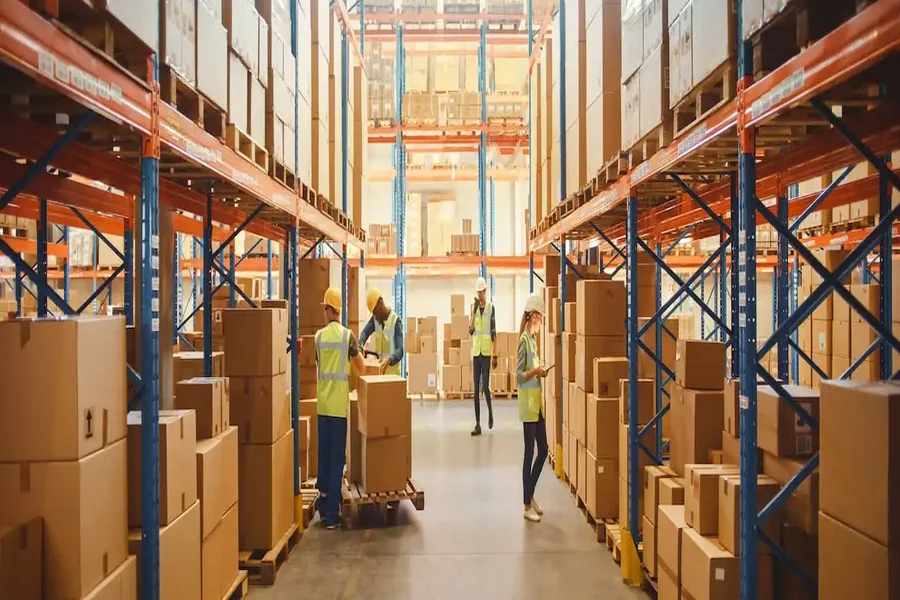
Have you ever wondered how the products you order online arrive at your doorstep so quickly? How do massive companies manage to store and organize millions of items efficiently without chaos? The answer often lies in big warehouses — enormous, highly organized facilities that form the backbone of modern supply chains. In today’s fast-paced global economy, these warehouses are more than storage spaces; they are complex hubs of technology, strategy, and logistics that make rapid delivery and effective inventory management possible.
Understanding Big Warehouses
A big warehouse is more than just a large building filled with products. It is a sophisticated hub designed for efficient storage, handling, and distribution of goods. These facilities often span hundreds of thousands, or even millions, of square feet, and they employ cutting-edge technology to maximize storage density and operational efficiency.
Unlike traditional warehouses, which were primarily storage spaces, modern big warehouses function as distribution centers. They not only store inventory but also play an active role in processing orders, managing returns, and even assembling or customizing products for customers. For instance, some warehouses include value-added services such as repackaging, labeling, or kitting products to meet specific customer requirements.
The Evolution of Warehouse Design
The design and architecture of big warehouses have evolved alongside advances in logistics and technology. Early warehouses were often simple, single-story buildings with basic shelving and manual labor handling most tasks. However, as consumer demand grew and e-commerce surged, companies required more sophisticated solutions to manage high volumes of inventory efficiently.
Modern warehouses utilize multi-level shelving systems, automated conveyor belts, robotics, and artificial intelligence (AI) to streamline operations. Automated storage and retrieval systems (AS/RS) allow warehouses to store products densely while enabling rapid picking and retrieval. Robots now handle repetitive tasks like moving pallets or sorting packages, reducing labor costs and minimizing human error. Efficient forklift hire is also a key factor, as using well-maintained forklifts allows workers to move heavy items quickly and safely, enhancing overall productivity.
Additionally, layout optimization has become a science in itself. Warehouses are designed to reduce the distance traveled by workers or machines, streamline order picking, and ensure safety standards. Efficient layouts help meet the dual goals of speed and accuracy, which are critical for maintaining customer satisfaction in today’s fast-paced retail environment.
The Role of Technology
Technology is the backbone of modern big warehouses. Warehouse Management Systems (WMS) track inventory in real-time, optimize picking paths, and forecast demand. This reduces the risk of stockouts and overstocking, which can be costly for businesses.
Furthermore, advanced analytics and machine learning help warehouse managers make data-driven decisions. For example, predictive analytics can anticipate peak demand periods and adjust staffing levels accordingly. Drones and automated guided vehicles (AGVs) are increasingly used for inventory checks, reducing the need for manual counting and enabling faster operations.
The integration of the Internet of Things (IoT) has also revolutionized warehouse management. Sensors track environmental conditions, such as temperature and humidity, which is crucial for sensitive products like pharmaceuticals and fresh food. IoT-enabled devices provide real-time alerts for potential issues, allowing proactive intervention before problems escalate.
The evolution of industrial infrastructure has shifted the focus toward integrated technological stacks that manage the entire lifecycle of goods. To support these sprawling physical hubs, enterprises are increasingly adopting digital frameworks that bridge the gap between back-office operations and floor-level logistics. Decision-makers often use specialized tools to learn about this AI procurement platform, as these systems provide the necessary visibility into supplier spending and commitment management. This holistic visibility ensures that as warehouse footprints expand, the administrative oversight of the materials and services required to keep them operational remains tightly controlled. Such technological synergy is essential for maintaining the agility needed to thrive in a high-demand, e-commerce-driven market environment.
Economic and Strategic Importance
Big warehouses are not only operational assets; they also hold significant economic and strategic importance. They enable companies to consolidate inventory in centralized locations, reducing transportation costs and improving supply chain efficiency. By positioning warehouses near major transportation hubs or urban centers, businesses can speed up delivery times and reduce shipping costs, giving them a competitive advantage.
In the era of e-commerce giants like Amazon and Alibaba, the ability to fulfill orders quickly is a defining factor for success. Large warehouses allow these companies to offer same-day or next-day delivery, which has become a standard expectation among consumers.
Moreover, big warehouses provide strategic resilience. By diversifying storage locations, companies can mitigate risks such as natural disasters, supply chain disruptions, or geopolitical tensions. This redundancy ensures that operations can continue smoothly even if one warehouse is temporarily out of commission.
Environmental Considerations
While big warehouses contribute significantly to economic efficiency, they also pose environmental challenges. These massive structures consume large amounts of energy for lighting, heating, cooling, and running machinery. Additionally, transportation to and from warehouses contributes to carbon emissions.
In response, many companies are adopting sustainable practices in warehouse design and operation. Solar panels, energy-efficient lighting, and electric-powered machinery help reduce energy consumption. Some warehouses implement green building standards, such as LEED certification, to minimize environmental impact.
Furthermore, optimization of logistics can reduce emissions by minimizing transportation distances and improving load efficiency. Automation and AI-driven systems contribute to sustainability by reducing waste and energy consumption during operations.
The Human Element
Despite the increasing automation in big warehouses, human labor remains a critical component. Skilled workers are essential for overseeing complex systems, performing quality checks, and managing exceptions that machines cannot handle. The rise of automation has shifted the nature of warehouse jobs, emphasizing technical skills, problem-solving, and system management over manual labor.
Employee safety is another key focus in large warehouses. The sheer size of these facilities and the use of heavy machinery pose potential hazards. Companies invest in training, safety protocols, and monitoring systems to protect their workforce. Automation also reduces the risk of repetitive strain injuries and accidents, contributing to a safer working environment.
Challenges and Future Trends
Managing big warehouses comes with several challenges. High capital costs, complex logistics, labor management, and technological integration are ongoing concerns. Additionally, warehouses must adapt to changing consumer behavior, such as the increasing demand for faster delivery and personalized services.
Looking forward, several trends are shaping the future of big warehouses:
- Hyperautomation: The integration of robotics, AI, and IoT will continue to advance, creating fully automated warehouses capable of operating with minimal human intervention.
- Urban Warehousing: As urban populations grow, companies are exploring smaller, strategically located warehouses within cities to meet same-day delivery expectations.
- Sustainability Focus: Environmental considerations will drive innovations in energy efficiency, waste reduction, and carbon footprint minimization.
- Flexible Warehousing: Companies are exploring modular and temporary warehouse solutions to handle seasonal spikes in demand or rapidly changing market conditions.
- Digital Twins: Creating virtual models of warehouses allows managers to simulate operations, identify bottlenecks, and optimize layouts without disrupting real-world operations.
Conclusion
Big warehouses are more than storage spaces; they are sophisticated, technology-driven centers that form the backbone of modern supply chains. From enabling rapid e-commerce fulfillment to supporting large-scale manufacturing, they play a critical role in ensuring products reach consumers efficiently and reliably.
As technology continues to evolve, these warehouses will become even smarter, safer, and more sustainable. Companies that invest in innovative warehouse strategies and embrace automation, data analytics, and sustainable practices will gain a significant edge in an increasingly competitive marketplace.
In essence, big warehouses are a testament to human ingenuity in logistics — a blend of architecture, technology, and strategy that keeps the world’s commerce moving. Their importance will only grow as global trade expands and consumer expectations continue to rise.